Those Black Streaks on Your Roof: What the Algae Really Is
You glance up at your roof one day and notice long dark streaks running down the tiles, like something has been spilled from the ridge. They weren't there a few years ago, and now they seem to be spreading. If you've spotted this on your home in Derby, you're looking at one of the most common roof problems in the area, and it's almost never what people first assume.
Most folk think it's dirt, soot, or staining from the old railway and factory days. It isn't. Those black streaks are alive, and understanding what they actually are makes it a lot easier to see why scrubbing at them never quite works. Here's the real story behind the marks on your roof and what it takes to shift them.
The quick answer: Those black streaks are a hardy algae called Gloeocapsa magma, a living organism that feeds on the surface of your tiles and spreads in damp, shaded conditions, which is why a proper treatment clears it while a quick scrub does not.
1. It's algae, not dirt or pollution
The black staining is a type of blue-green algae, and it clings to the surface of your roof as a living colony. It arrives as tiny airborne spores that settle on the tiles, and once a few take hold, they multiply. What looks like a stain is actually a thin, living film spreading across the surface, which is why it comes back no matter how many times you wipe at it.
People in Derby often blame the city's industrial past, thinking it's soot left over from the railway works or the old factories. It's an easy assumption, but the truth is biological. The same streaks show up on brand new estates in Mickleover and Oakwood where there's no old industry nearby at all, which tells you the cause is in the air and the weather, not the chimneys.
2. Why the streaks always run downwards
Look closely and you'll see the algae starts at the top and bleeds down the slope. That's because it usually takes hold near the ridge, then rainwater carries the spores and the dark pigment down the tiles as it drains. Each rainfall spreads the colony a little further, which is why the marks form those long vertical runs rather than random patches.
Derby gets plenty of rain rolling in off the Peak District, and every wet spell effectively waters the algae and moves it along. On a north-facing slope that barely sees the sun, the tiles stay damp for days, and that constant moisture is exactly what the algae needs to keep marching down toward the gutter.
3. What feeds it and helps it spread
Modern tiles often contain limestone filler, and the algae feeds on the calcium carbonate in it along with any airborne particles that settle on the surface. Combine that food source with moisture and shade, and you've got the perfect conditions. It doesn't need much to thrive, which is why it can cover a roof so thoroughly over just a handful of years.
Shade is the big one in Derby. Mature trees line a lot of the older residential streets, and homes tucked behind them in areas like Littleover and Allestree stay damp long after the rain stops. The Derwent valley keeps the air moist too, so roofs across the city hold the kind of lingering damp that algae loves.
4. Why scrubbing and jet washing make it worse
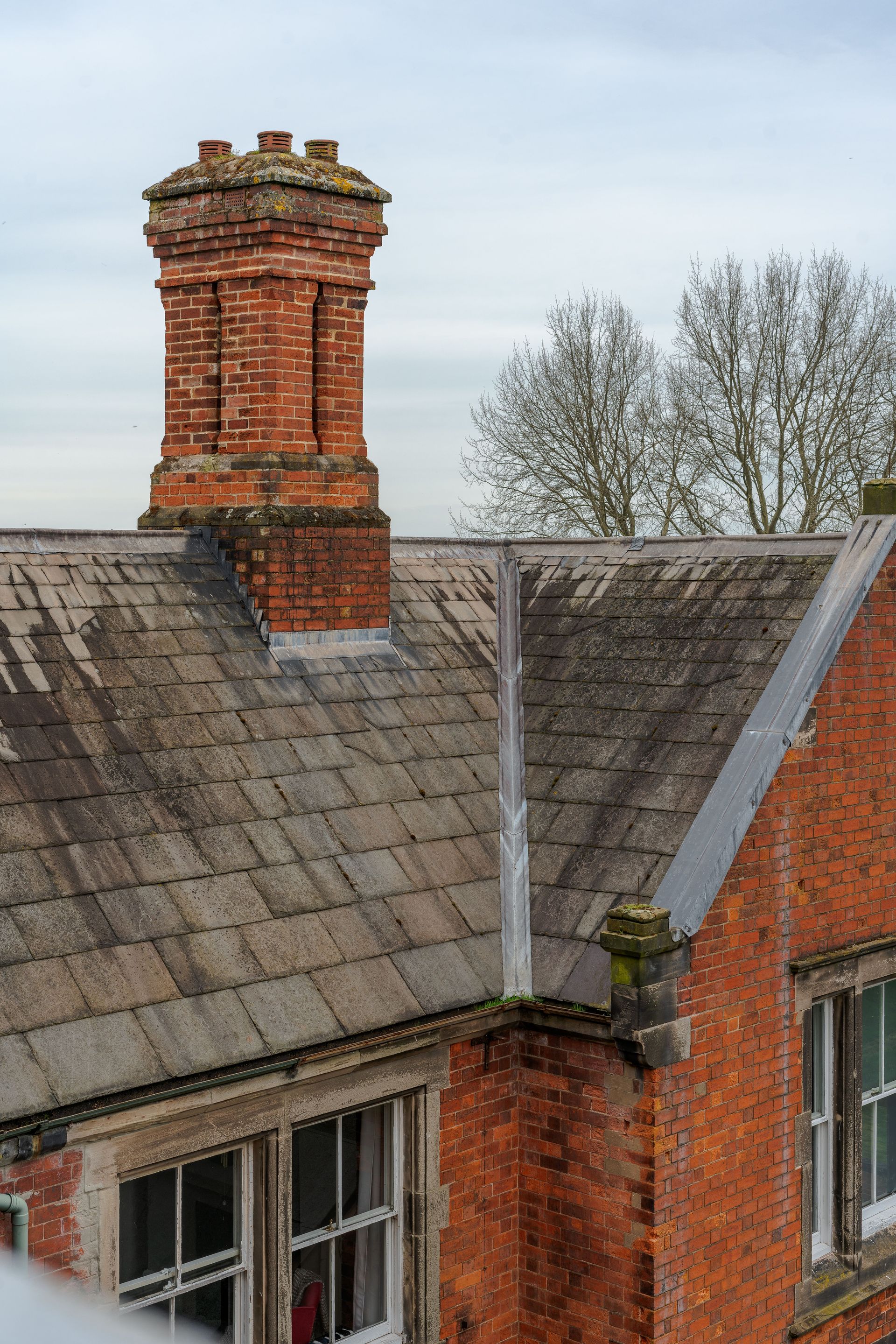
The instinct is to get up there and blast it off, but that's a mistake on two counts. High-pressure water forces its way under the tiles and can strip the protective surface, and on the older slate you find across Derby's Victorian terraces, it can crack tiles outright. You end up with a damaged roof that greens up again within a year.
Scrubbing doesn't work either, because the algae's roots sit in the pores of the tile where a brush can't reach. You might shift the surface colour for a while, but the colony is still alive and it simply grows back. To actually clear it, you have to kill the organism, not just wipe away what you can see.
5. How a soft wash and biocide clears it properly
The method that works is a soft wash. Low-pressure water gently lifts the loose growth without harming the tile, and then a biocide treatment goes on to kill the algae at the root. That treatment keeps working for weeks afterwards, reaching the spores deep in the surface so the colony can't just bounce back.
Because the biocide does the slow work, you often see the roof keep improving after the crew has left. The Derbyshire rain that once spread the algae now helps rinse the dead growth away instead. It's the difference between a clean that lasts years and a scrub that lasts a season.
6. Keeping the streaks from coming back
Once the algae's gone, a few simple habits slow its return. Keeping gutters clear stops water pooling and running back over the tiles, and cutting back any overhanging branches lets more light and air onto the roof so it dries faster. The drier the surface, the harder it is for new spores to settle.
A periodic biocide top-up keeps the protection topped up too. Given how damp Derby stays through autumn and winter, some homes benefit from a check every couple of years, especially the shaded ones near the river or under heavy tree cover. Stay on top of it and the black streaks needn't return.
- It's living algae: The black streaks are a colony of Gloeocapsa magma, not dirt or soot.
- Rain spreads it: Water carries the spores and pigment down the slope, forming vertical streaks.
- Damp and shade feed it: North-facing, tree-shaded roofs across Derby hold the moisture it needs.
- Pressure washing harms tiles: High pressure damages the surface and the algae grows back anyway.
- Biocide is the fix: A soft wash plus biocide kills the algae at the root so the roof stays clear.
Frequently Asked Questions
Is the black algae damaging my roof?
Over time, yes. As it holds moisture against the tiles and works into the surface, it can shorten the life of the roof and, if left long enough, contribute to tiles degrading, so clearing it protects the roof as well as its looks.
Why does my neighbour's roof have it but mine doesn't?
It often comes down to shade and aspect. A north-facing or tree-shaded roof stays damp far longer than a sunny south-facing one, so two houses on the same Derby street can weather very differently.
Will the streaks come back after cleaning?
Not quickly, if it's done properly. A biocide treatment kills the colony and keeps working for weeks, so a good clean lasts years rather than months, especially with clear gutters and trimmed-back branches.
Can I just paint or seal over it?
That's not a real fix. Sealing over live algae traps the problem underneath and can cause other issues, so the growth needs killing and clearing first before anything else is considered.
Does the algae spread to my walls or neighbours?
The spores are airborne, so heavy growth can spread to nearby surfaces and adjoining roofs over time. Treating it early keeps it from becoming a shared problem along a terrace.
Tired of the black streaks on your roof?
Ben's Roof Cleaning provides roof cleaning, moss removal and gutter cleaning across Derby and Derbyshire, with over 15 years of experience. Get in touch or call 01332 325923
for a free, no-obligation quote.
Knowing your enemy makes it easy to beat
Once you understand that those streaks are a living algae rather than dirt, the right approach falls into place. You can't scrub a living thing off your roof, but you can kill it and keep it from coming back. For the damp, shaded roofs so common across Derby, a soft wash and biocide is what turns a streaked, tired roof back into a clean one that stays that way.